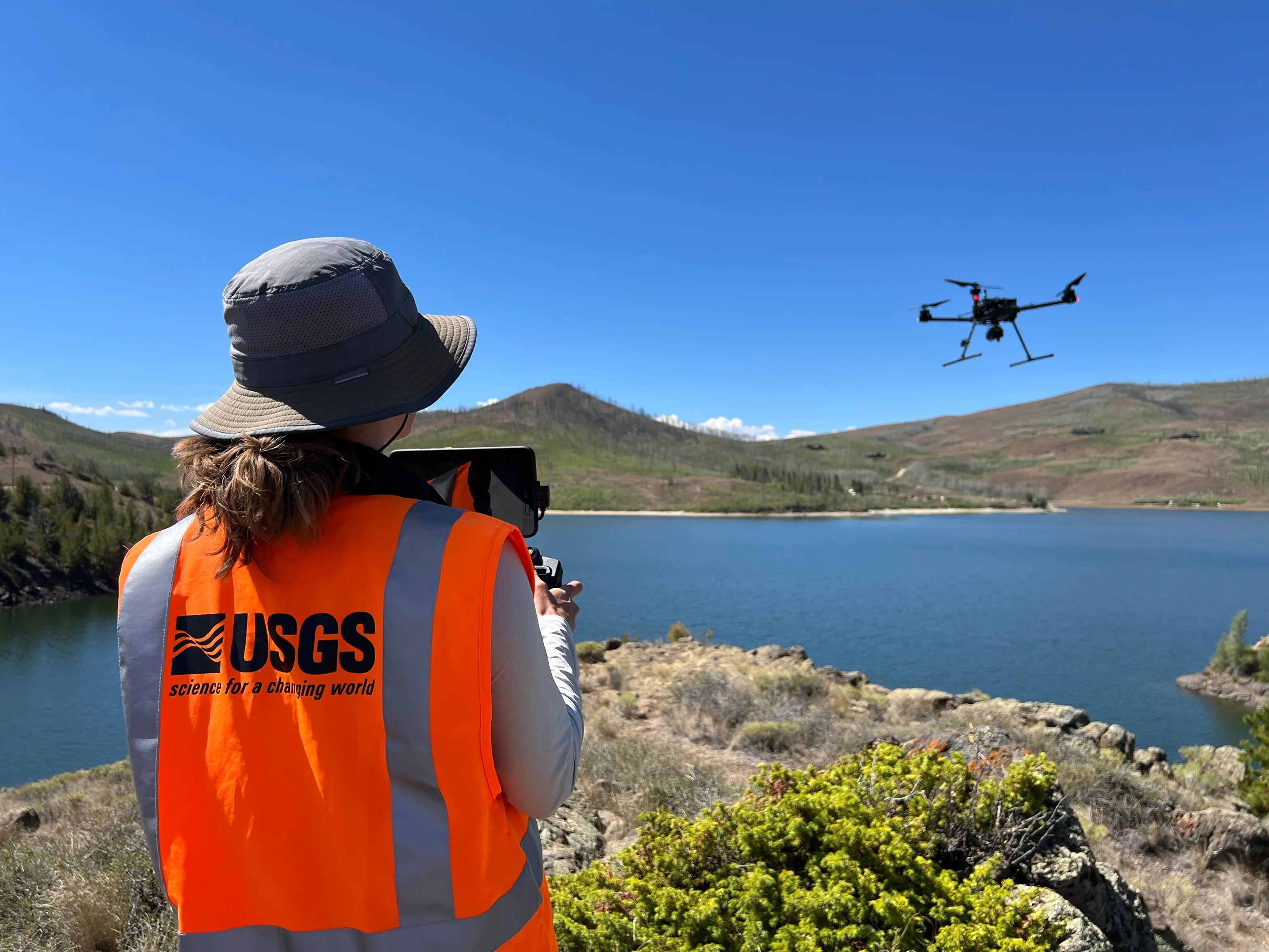
A drone lost-link procedure tells the crew what to do when the command-and-control connection between the pilot and aircraft fails. Stop the mission, keep the aircraft and surrounding hazards under observation, identify its actual response, and use the aircraft-specific recovery procedure. Return-to-home is useful only when its settings, navigation inputs, and route support a safe recovery.
For U.S. civil operations under Part 107, prepare that response before launch. The process below helps an operator turn equipment instructions into a usable crew card. It does not prescribe one set of buttons, a reconnect timeout, or a return altitude for every drone.
On This Page
- Identify which connection has failed
- Prepare the aircraft and recovery area
- Build the crew response card
- Recognize when recovery is failing
- Record the event and assess reporting
- Rehearse before releasing the next flight
Identify which connection has failed
Command and control, often shortened to C2, carries the instructions that govern the aircraft's flight. Video shows the camera view; telemetry reports aircraft information. An application, screen, or video fault does not by itself establish that command authority has been lost.
For example, DJI's Drone RTH Logic describes DJI Mini 2 SE/Mini 4K situations in which video is lost while the remote controller can still move the aircraft. It also describes selectable return, land, and hover responses. Those are model-specific examples, not capabilities to assume across a fleet.
Before flying, identify the exact warnings for control loss, video loss, stale telemetry, and navigation degradation in the applicable manual. Put those indications on the response card. A restored picture alone is insufficient evidence that normal control has returned; verify the aircraft's mode and response using the documented recovery method.
Keep loss of visual contact separate. A working radio does not restore the observation required for ordinary Part 107 flight. The publication's visual line of sight rules explain that boundary. If sight and control are both lost, the crew must address both conditions.
Prepare the aircraft and recovery area
Section 107.49 requires the remote pilot in command (RPIC) to assess the environment, inform participants about hazards and emergency procedures, verify working control links, and ensure enough power for the intended operation. Complete the broader commercial drone preflight checklist as well: lost-link preparation does not replace pilot, aircraft, or permission checks.
Use the current aircraft and controller instructions to record:
- Aircraft, controller, application and firmware versions, operating mode, and manual revision.
- The configured signal-loss action and its activation conditions, including any documented delay.
- The recorded home or recovery location, altitude reference, expected route, and landing behavior.
- Navigation and obstacle-sensing dependencies, including what changes when those inputs degrade.
- Low-energy behavior and the documented method of taking control after reconnection.
Do not transfer a timer or setting from a similar-looking model. DJI's documentation illustrates why: return behavior depends on the product, selected action, home-point recording, and navigation conditions. A return function may also remain active after reconnection. Confirm the specific behavior your crew will encounter.
Next, compare that behavior with the whole site. The drone site survey should cover the automatic recovery route as well as the intended work area. Check obstacles, overhead cover, people, usable landing areas, and the applicable airspace limits. Resolve whether the displayed return height is relative to takeoff or another reference before comparing it with terrain and restrictions.
Suppose an inspection passes beneath a roof overhang. If the configured recovery begins by climbing, an otherwise clear route back to the pad does not solve the immediate overhead obstruction. This is a planning example: change the route or use a supported, assessed alternative before launch. Do not rely on a pilot changing the setting after control has already failed.
The FAA's Part 107 Waiver Safety Explanation Guidelines ask applicants to explain command-link limits, failure procedures, and how return-to-home avoids people, vehicles, and obstacles. Although written for waiver applications, those questions are useful checks on the completeness of an ordinary flight's recovery plan. They do not grant a waiver.
Build the crew response card
Write one card for the actual aircraft configuration and add the day's recovery locations and contacts. Name the RPIC, any visual observer, and the person available to make calls. For a solo operation, do not assign simultaneous duties to an imaginary second crewmember.
The table below is a suggested card structure. Fill in its aircraft-specific actions before issuing it for flight; the sequence is an editorial application of the FAA's AC 107-2A, particularly its contingency, crew-briefing, and control-link guidance.
| Stage | Crew action | What the card must specify |
|---|---|---|
| Recognize | Call the observed warning and stop pursuing the work task. | Exact indications distinguishing control loss from video or display failure. |
| Observe | Keep visual track where possible; scan for aircraft, people, and obstacles. | Who watches the aircraft and who warns people near recovery areas. |
| Confirm | Compare actual movement with the configured failsafe. | Expected action, route, trigger conditions, and indications of deviation. |
| Recover | Follow the documented method for reestablishing control without losing hazard awareness. | Permitted antenna/controller actions, any safe repositioning, and how restored control is confirmed. |
| Land | Use the assessed recovery or alternate procedure as the situation permits. | Recovery locations, remaining-energy considerations, and conditions requiring escalation. |
| Escalate | Warn exposed people and contact the appropriate service when the developing hazard requires it. | Site-specific contacts, caller, and last-known aircraft information. |
Avoid adding controller power-cycling, repeated application restarts, mode changes, or motor-stop commands as generic steps. Each needs a documented aircraft-specific purpose and an assessment of what happens while that action is taken. A command sent over a failed link cannot be assumed to reach the aircraft.
Make the card accessible without the flight application or cellular service. During the briefing, have the observer repeat the expected recovery route and the call for an unexpected departure from it. Confirm that the crew can describe what it will see, rather than merely name the failsafe setting. After control returns, prioritize a safe landing and investigation over restarting the work task.
Recognize when recovery is failing
A lost link and an aircraft departing its expected recovery path are different situations. Use actual movement, available indications, and the prebriefed route to decide when to escalate. Do not wait through a borrowed countdown while the aircraft approaches people or other traffic.
In the site plan, define who will record the last reliable position, its timestamp, height and reference, direction of travel, battery indication, and observed behavior. Mark uncertain or stale values as such. If other aviation could be affected, use the air traffic contact or notification procedure established for the operation; use emergency services for an immediate threat to people. Keep the information concise enough for another person to act on.
FAA air traffic control guidance on UAS lost link distinguishes the programmed procedure from an aircraft deviating from it. Its transponder-code and certificate-of-authorization provisions concern equipped, coordinated operations. They do not mean an ordinary small drone can transmit a lost-link code or that every pilot has an assigned ATC frequency.
A flight-termination function, where fitted, needs its own explicit procedure and limitations. Stopping propulsion can transfer an airborne hazard to the ground; it is not a routine answer to a connection warning. Likewise, do not chase the aircraft into traffic, restricted access, or hazardous terrain to regain a signal.
Under Part 107, section 107.21, an in-flight emergency requiring immediate action permits deviation from that part only as necessary to meet the emergency. It does not authorize planning an unsafe recovery route. The same part requires yielding to other aircraft and prohibits continuing a flight when the system is no longer safe.
Record the event and assess reporting
After recovery, secure the aircraft using its normal shutdown instructions and keep people clear of damaged equipment. Preserve flight and controller logs, warning text, settings, photographs, and crew observations before troubleshooting changes the evidence. Record the event time and time zone, aircraft/configuration, actual failsafe action, reconnection attempts, landing location, damage or injuries, and notifications made.
Treat this as a recommended incident record, then add records required by an issued authorization, waiver, or applicable reporting rule. Record a brief dropout even if recovery appeared normal; its timing and configuration may help explain a recurring fault.
Keep the reporting decisions separate:
- FAA safety-event report: Section 107.9 requires reporting within 10 calendar days for serious injury, any loss of consciousness, or qualifying damage to property other than the drone. The property exception covers repair costs, including labor and materials, of $500 or less, or a total-loss property's fair market value of $500 or less. The FAA's reporting instructions identify DroneZone or the nearest Flight Standards District Office as reporting routes.
- Emergency deviation: Section 107.21 requires a written deviation report when the FAA requests one. That is separate from the safety-event trigger.
- NTSB notification: 49 CFR Part 830 requires immediate notification for covered accidents and listed serious incidents, including flight-control-system malfunction or failure. Assess an actual control-system failure against that rule even without an injury. A connection warning alone does not establish the failure classification. When applicability is unclear, contact the National Transportation Safety Board promptly rather than wait for the FAA deadline.
Part 830 defines an unmanned aircraft accident to include death or serious injury, or substantial damage to an aircraft holding an airworthiness certificate. That definition is separate from its listed serious incidents. Its notification provision lists the NTSB Response Operations Center at 844-373-9922 or 202-314-6290.
For an event requiring NTSB notification, preserve wreckage and associated records under section 830.10. Movement before custody is limited to removing injured or trapped people, preventing further wreckage damage, or protecting the public. Document original positions when possible. Do not begin repair or erase logs while those preservation duties apply.
Rehearse before releasing the next flight
Start with a tabletop exercise or a simulator that supports the relevant failure. Ask the crew to distinguish a frozen image from lost control, explain the expected recovery path, and handle an occupied landing area. Use manufacturer-supported ground checks with the prescribed precautions. Do not switch off an airborne controller merely to demonstrate a generic checklist.
After a real event, keep the affected configuration out of service until inspection and appropriate checks support safe operation. AC 107-2A's Appendix C specifically advises further control-link inspection and testing for delayed or unsynchronized control inputs. Reconnection alone does not establish reliability.
Record the identified cause or unresolved uncertainty, corrective action, checks performed, and the responsible person's release decision. Revise the card after relevant equipment, software, mission, or site changes. The useful endpoint is a crew that knows the expected behavior, recognizes when it is wrong, and has a feasible next action.
Sources
- 14 CFR section 107.49: federal preflight assessment, briefing, control-link, and power duties.
- 14 CFR Part 107: safe condition, emergency deviation, right-of-way, and safety-event reporting rules.
- FAA AC 107-2A: advisory guidance on contingency planning, crew preparation, and control-link inspection.
- FAA Part 107 Waiver Safety Explanation Guidelines: application questions about link limits, return routes, alerts, and failure procedures.
- DJI Drone RTH Logic: manufacturer examples of model-dependent video, control, and return behavior.
- FAA ATC procedures, section 5-2-6: coordinated lost-link procedures and escalation for abnormal aircraft behavior.
- FAA Part 107 accident-reporting instructions: reporting channels.
- 49 CFR Part 830: NTSB notification, reporting, and preservation duties.
Last checked: September 8, 2026. Recheck the applicable regulations, operating permissions, and aircraft instructions when preparing a flight.