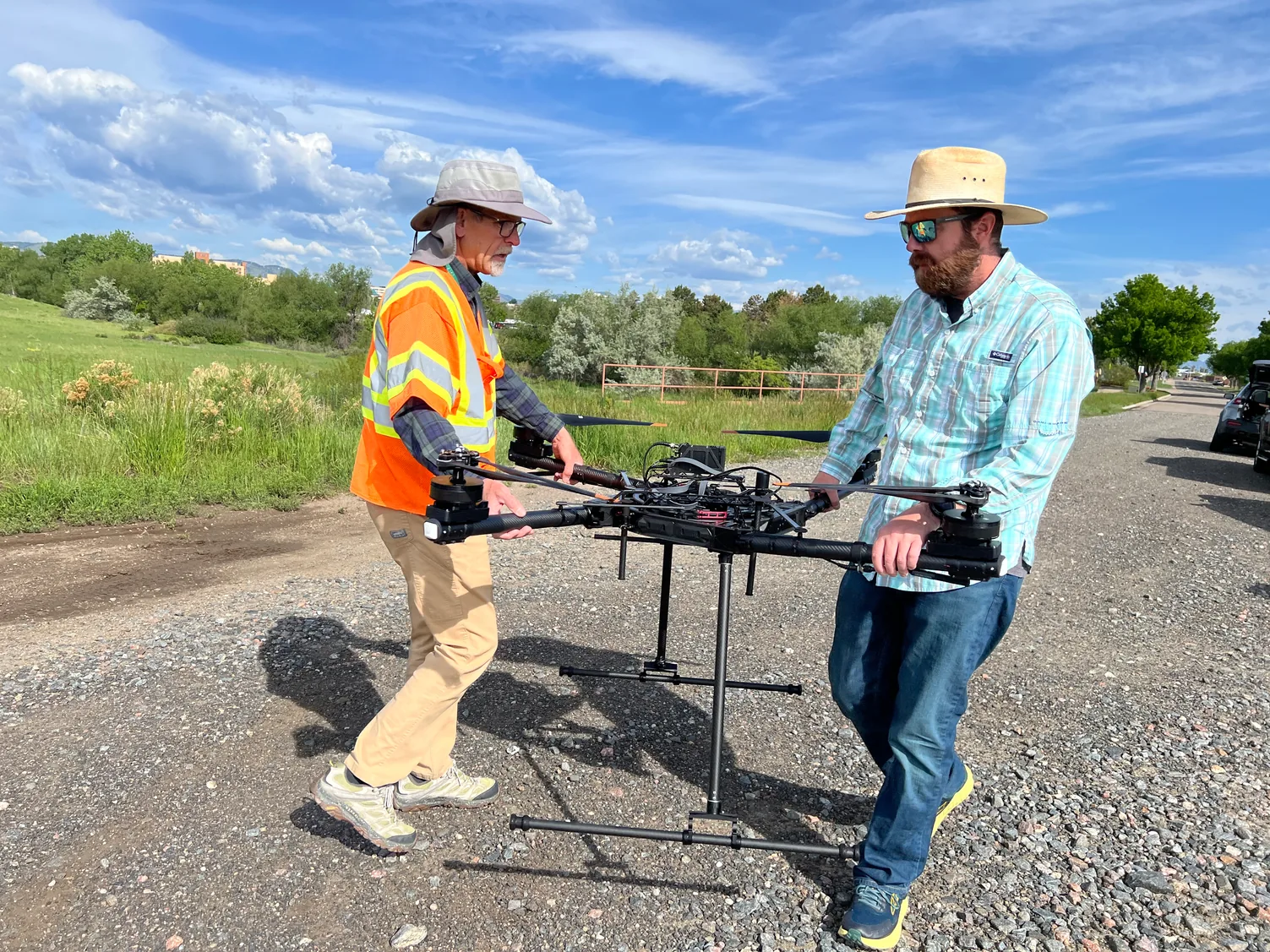
Part 107 recurrent training keeps a U.S. remote pilot's aeronautical knowledge current so they can continue serving as remote pilot in command. That role requires a qualifying initial knowledge test or training completed within the previous 24 calendar months. For existing certificate holders, the FAA's online recurrent course is the practical way to maintain currency or restore it after a lapse. See the FAA's current certification and recurrent-training guidance.
Your permanent Remote Pilot Certificate does not expire simply because two years have passed. The FAA's certificate-expiration FAQ distinguishes the permanent certificate from the knowledge currency needed to use it. If you are overdue, complete the appropriate training before returning as remote pilot in command.
Who needs recurrent training, and which course applies?
Start with your existing certificates and whether you meet the Part 61 flight-review requirements. Part 61 governs conventional pilot certification; holding that certificate alone does not make someone a Part 107 remote pilot.
| Your situation | Appropriate next step | What to verify |
|---|---|---|
| You hold a Part 107 Remote Pilot Certificate and want to maintain or restore currency | Complete ALC-677, Part 107 Small UAS Recurrent | The course applies regardless of your current knowledge recency |
| You also hold a Part 61 pilot certificate, other than a student certificate, and meet the flight-review requirements | ALC-515 is an available recurrent option; ALC-677 also applies to Part 107 certificate holders | Both the Part 61 eligibility and the Part 107 training must support the route you use |
| You have never received a Part 107 Remote Pilot Certificate | Follow the FAA's initial certification process | Completing recurrent training alone does not issue the certificate |
Source basis: FAA certification guidance and the official ALC-677 and ALC-515 course descriptions, checked September 7, 2026. The table organizes those requirements by pilot situation.
If you use the Part 61 route, track your flight-review eligibility separately. A recent ALC-515 completion does not replace a flight review. When that eligibility is absent, ALC-677 provides the recurrent path available to any Part 107 certificate holder. If you are new to Part 107, follow the initial-certification row instead, even if you already fly crewed aircraft.
Recurrent training is tied to the pilot's role, not to every person on a drone crew. Under Part 107, §§107.12 and 107.65, a person manipulating the controls can use the direct-supervision exception only when the remote pilot in command can immediately take direct control. That exception does not make the supervised person eligible to serve as remote pilot in command.
Recreational TRUST is a different requirement. The FAA's UAS pilot-testing guidance describes TRUST as a one-time test for the recreational exception. It does not replace Part 107 recurrent training.
Calculate the deadline from the qualifying completion month
Use the date you passed the initial knowledge test or completed your qualifying training, rather than the date your plastic certificate arrived. Move forward 24 calendar months and use the last day of that month. The FAA illustrates this method in AC 107-2A, Figure 6-1.
For example, suppose you completed qualifying training on September 12, 2024:
- To continue without a gap, complete recurrent training by September 30, 2026.
- If you finish early on August 20, 2026, the next deadline is August 31, 2028. The unused September time does not carry forward.
- If you finish late on October 5, 2026, you cannot exercise remote-pilot-in-command privileges from October 1 until training is completed on October 5. The next deadline becomes October 31, 2028.
These are worked examples using the FAA's calendar-month method, not dates assigned to a particular pilot. There is no grace period for acting as remote pilot in command after currency lapses. A long gap alone does not require starting initial certification again: FAA guidance makes ALC-677 available to certificate holders regardless of recency. Suspension or revocation is a separate issue that a recurrent course does not cure.
Set a reminder before the due month becomes a scheduling emergency. An employer should base dispatch decisions on the actual completion record and calculated deadline, not a pilot's recollection of having renewed sometime that year.
Complete the official course and confirm the result
Before starting, locate your remote pilot certificate, your latest qualifying test or training record, and access to your personal FAASafety.gov account. For ALC-515, also confirm the Part 61 flight-review prerequisite. The FAA lists both recurrent courses as available at no cost.
- Open the correct course. Use the ALC-677 or ALC-515 official course link above and check its eligibility description.
- Sign in and enroll. A course preview is not enrollment. The FAASafety.gov course FAQ explains that enrollment is needed to access a course's exam.
- Complete the course requirements. Work through the material, review, and assessment as directed. Do not treat merely opening the course or reaching its last lesson as proof of completion.
- Retrieve the completion certificate. In Courses & Events, open My Courses and use View Certificate for the completed course. Save or print it, then verify your name, course identifier, and completion date.
- Update your next deadline. Calculate it from this completion month and replace the old reminder. If you fly for an organization, provide the completion record through its normal training-record process.
If you cannot find the assessment, first check that you enrolled rather than previewed. If the completion record is missing or incorrect, use FAASafety.gov support to resolve it before relying on that training for an assignment. Recovering an old certificate through My Courses may also resolve uncertainty about your existing deadline.
Keep records that prove both certification and currency
The permanent certificate and the recurrent completion certificate answer different questions. The first establishes your remote pilot credential; the second documents the training and date used to establish recent knowledge. Keeping only the plastic card leaves the deadline unproven.
Section 107.7 requires the remote pilot certificate and identification to be in your physical possession and readily accessible when exercising certificate privileges. It also requires applicable records to be made available to the FAA on request. As a practical field habit, keep an accessible copy of your current training completion record alongside those documents, including an offline copy if connectivity is unreliable.
For an employer's training register, a useful entry includes the pilot, qualifying course or test, completion date, calculated current-through date, and a link to the supporting record. Where the Part 61 route is used, record the separate flight-review basis as well. These register fields and backup copies are recommended management practices, not an FAA-prescribed spreadsheet.
Check flight readiness after restoring currency
Finishing online training updates knowledge currency; it does not demonstrate that you can still handle your assigned aircraft competently. After a long break, arrange suitable practice or supervised familiarization before accepting a demanding mission. Review the aircraft's controls, battery condition, lost-link behavior, and emergency actions with the equipment you will actually use.
Before dispatch, confirm three separate things:
- Pilot eligibility: certificate, knowledge currency, any relevant restrictions, and fitness for the flight.
- Aircraft readiness: condition for safe operation, working control links, adequate power, and secure attachments.
- Mission readiness: weather, airspace and flight restrictions, people and ground hazards, and a crew briefing covering roles and emergency procedures.
The preflight duties are set out in §§107.15, 107.17, and 107.49. Recurrent completion does not itself grant airspace authorization or waive an operating limitation. Night operations also retain their separate requirements under §107.29, including applicable training and anti-collision lighting.
For your next flight, work backward from the assignment date: verify currency, complete the appropriate recurrent course if needed, preserve its record, and then assess the aircraft and mission. For a team manager, checking that sequence before assigning the remote pilot prevents a permanent certificate from being mistaken for current operating eligibility.
Sources
- FAA: Become a Certificated Remote Pilot. Official initial-certification and recurrent-course guidance, including course eligibility and cost.
- FAA: Remote pilot certificate expiration FAQ. Explains permanent certification and the separate recency requirement.
- FAASafety.gov: ALC-677 course overview. Official recurrent course for Part 107 certificate holders.
- FAASafety.gov: ALC-515 course overview. Official recurrent course with Part 61 and current-flight-review prerequisites.
- 14 CFR Part 107. Regulatory text for certificate possession, pilot eligibility, knowledge recency, and operating duties; eCFR Title 14 displayed current through September 3, 2026.
- FAA AIP ENR 8.5: UAS Pilot Testing, Certification and Responsibilities. Official guidance distinguishing initial certification, recurrent training, and recreational TRUST.
- FAA AC 107-2A: Small Unmanned Aircraft System. Advisory guidance; Figure 6-1 illustrates on-time, early, and late recurrent-training cycles.
- FAASafety.gov: Frequently Asked Questions. Official enrollment, course access, and completion-certificate retrieval instructions.
Last checked: September 7, 2026.