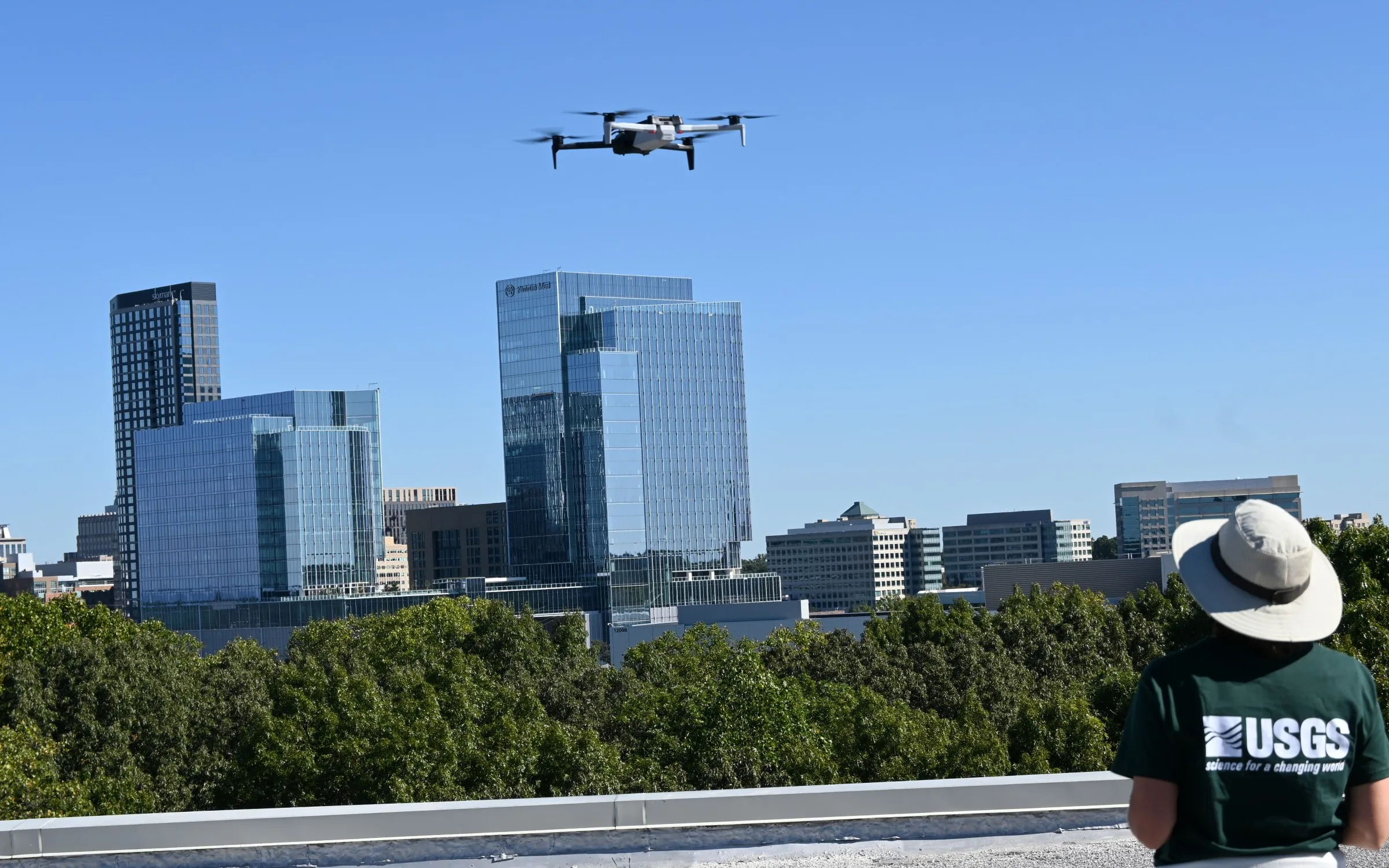
To prepare a Part 107 BVLOS waiver application, define the exact operation, identify the rules it cannot meet, and assemble evidence showing how the crew and aircraft will manage the resulting risks. BVLOS means beyond visual line of sight. For a new application, use the FAA's Aviation Safety Hub and explain the alternative safety measures supporting a waiver of § 107.31, plus any other necessary relief. Approval applies only within the issued waiver's terms.
Start with a mapped mission and a documented safety case before entering the application. A remote pilot certificate, long radio range, or an aircraft's automated flight capability does not independently authorize BVLOS. The controlling waiver standard requires a complete operational description and a justification for safe operation. See 14 CFR Part 107, Subpart E.
On This Page
- Confirm the operation and permissions
- Define the mission before collecting attachments
- Build the safety case around failures
- Prepare the crew and supporting records
- Complete the Aviation Safety Hub application
- Handle FAA questions and the issued conditions
- Decide whether the application is ready
Confirm the operation and permissions
Identify exactly where visual line of sight is lost
Under § 107.31, the remote pilot in command, control manipulator, and visual observer if used must be able to see the aircraft throughout the flight with unaided vision except corrective lenses. The rule also specifies who must exercise that ability. The visual task includes determining aircraft position and movement, observing surrounding hazards, and assessing danger to people or property.
Mark the route segments where terrain, a structure, distance, or the proposed crew arrangement prevents compliance. There is no universal mileage threshold in § 107.31. A flight behind a building can raise the issue even when the aircraft remains close to its controller. A camera view does not replace the rule's unaided-vision requirement.
If repositioning the pilot and changing the route allows the whole operation to comply, evaluate that option before investing in a waiver application.
Separate BVLOS relief from other permissions
Review the whole mission against current Part 107. Confirm that the aircraft and operation fit its scope, the remote pilot has the required certificate and recent aeronautical knowledge, and registration will be in place before flight. A training completion certificate alone is not an operational waiver.
Then check whether the mission also involves observer arrangements that depart from § 107.33, multiple aircraft under § 107.35, people under § 107.39, moving vehicles under § 107.145, or deviations from § 107.51 operating limits. Request only the relief the actual operation needs. An airspace authorization does not by itself waive visual line of sight; a § 107.31 waiver does not by itself authorize controlled-airspace access.
There is a specific disqualifier for the Part 107 waiver route: § 107.205(c) prohibits issuing a § 107.31 waiver to carry another person's property by aircraft for compensation or hire. If that describes the business model, resolve the applicable operating authority with the FAA before preparing this application.
Check Remote ID separately. The FAA's Remote ID guidance says pilots using an add-on broadcast module must be able to see the drone throughout flight; the FRIA route also requires visual line of sight. A Part 107 waiver cannot simply be assumed to remove those Part 89 conditions. Document the aircraft's applicable Remote ID compliance route and any separately required authorization.
The FAA has also proposed a broader BVLOS rule. A proposed rule announcement is not flight authority. Check the effective regulations when applying and again before operating.
Define the mission before collecting attachments
Write a concept of operations, usually called a CONOPS: a description of who will fly what, where, under which limits, and how normal and abnormal flights will be handled. The FAA's waiver guidance asks for operational, aircraft, personnel, and mitigation details.
Make the narrative and map describe the same mission. Include the route and operating boundary, maximum altitude above ground level, launch and recovery locations, nearby airspace and aviation activity, access by people and vehicles, aircraft configuration, and minimum crew. Specify whether the request includes daylight, twilight, or night; nighttime BVLOS needs an explanation of its additional risks.
For preparation, organize the material into four linked documents:
- Mission description: the requested operating area, equipment, crew, and operating limits.
- Safety explanation: each hazard, the measure addressing it, and the evidence supporting that measure.
- Crew procedures: the actions people can actually execute, including stopping the operation.
- Supporting records: maps, manuals, configuration details, training records, and relevant test results.
This organization is an editorial recommendation, not a prescribed FAA file structure. Give each document a date and revision identifier so a changed route cannot silently coexist with an older emergency procedure.
An illustrative inspection mission shows why this matters. Suppose the proposed route passes behind a warehouse and near a service road. The normal route may avoid the road, while the aircraft's automatic return path crosses it. Draw both paths. Resolve the return behavior before writing that the operation avoids vehicles. Do not submit the illustration as evidence about your own aircraft or site.
Build the safety case around failures
The FAA's Waiver Safety Explanation Guidelines and Guiding Questions, particularly § 107.31, ask how the pilot will know aircraft state, maintain containment, avoid other aircraft, manage failures, assess weather, and train participants. They also address command-and-control links and lighting. Answer the applicable questions explicitly; a brochure is supporting material, not the safety explanation.
Use the following preparation table to connect the FAA's questions to something a reviewer can inspect. The suggested records are editorial examples based on the WSEG and FAA BVLOS trend analysis, checked September 8, 2026. They are not universal approval criteria.
| Failure or exposure | Explain in the application | Useful supporting record |
|---|---|---|
| Control link weakens behind terrain or buildings | How degradation is detected and which recovery action follows | Route-specific link assessment with configuration and test conditions |
| Another aircraft approaches | How detection leads to a timely avoidance action | Coverage assessment and crew or system response procedure |
| Navigation becomes unreliable | How the crew recognizes uncertainty and reaches a safe state | Navigation-failure procedure tied to the actual aircraft behavior |
| Automatic return leaves the intended area | How the return route and altitude remain compatible with surrounding hazards | Annotated return path and configuration record |
| A person or vehicle enters the operating area | Who detects entry and how the operation responds | Access-monitoring plan and interruption drill |
| Weather changes along the route | How observations trigger a stop or recovery | Named weather sources, review intervals, and documented operating limits |
Two technical distinctions deserve particular attention. Command and control (C2) is the connection used to direct the aircraft. Evidence of a usable C2 link does not establish that the pilot can detect an approaching aircraft. Detect and avoid (DAA) covers finding traffic and executing an avoidance strategy; detection alone does not complete that task.
For the system-design detail behind that distinction, review Unmanned Systems' guide to detect-and-avoid architectures and timing limits. It compares surveillance options and traces the response chain, helping you identify coverage and delay assumptions to substantiate in your own safety case. It does not establish FAA approval for a particular operation.
The FAA's BVLOS application trend analysis identifies inadequate C2 operating-envelope evidence, vague weather procedures, and incomplete training explanations as weaknesses. It also explains why a forward camera or ADS-B In alone may be insufficient: camera coverage is directional, ADS-B information covers cooperative traffic, and neither description by itself explains avoidance.
As a preparation exercise, trace the full sequence for your proposed system: detection, alert delivery, crew recognition, decision, command transmission, and aircraft response. Identify which timings and coverage limits you can substantiate. The WSEG asks about the minimum detection distance needed to carry out avoidance; it does not supply one universal distance for every operation. A manufacturer's maximum transmission distance is not proof of site performance. Use the operator lost-link procedure to structure the crew response to control loss, then document the additional route-specific evidence and conditions required by the proposed BVLOS operation.
When evidence is missing, identify the test or documentation needed and conduct any flight testing only under authority already available. Do not fly unauthorized BVLOS to generate evidence for a future waiver.
Prepare the crew and supporting records
Distinguish legal currency from proficiency in this particular operation. The application should explain the knowledge and practical tasks required of each role, who evaluates them, how performance is documented, and how competence is maintained. The WSEG's § 107.33 discussion specifically flags observer relay arrangements as potentially needing relief from parts of that section. Simply adding more observers does not automatically make the arrangement compliant.
For an internal rehearsal, give the crew a specific interruption: loss of the observer's radio, a traffic alert, navigation uncertainty, or entry through an access gate. Ask each person to state the indication they will receive, their immediate action, and who can stop the mission. Record what was actually demonstrated and correct gaps before claiming the crew can perform the procedure.
Keep the preparation file organized around these records:
- Pilot qualification and currency evidence, role assignments, training subjects, evaluations, and recurrent-training arrangements.
- Aircraft and ground-system identification, software/configuration baseline, manuals, maintenance status, and applicable transmitter authorization details.
- Maps, operating procedures, test methods, actual results and limitations, and the revision of each document used in the application.
These are recommended ways to support and maintain the safety case. Specific retention, reporting, and operational logging duties depend on the applicable rules and issued conditions; do not describe every suggested record as a universal Part 107 mandate.
The FAA's AC 107-2A provides a useful foundation for crew briefings and preflight assessment. Its guidance addresses weather, airspace, people and vehicles, control-link function, available power, secured loads, and inspection documents. Turn those checks into the mission's dispatch procedure, adding the checks your proposed mitigations need.
Complete the Aviation Safety Hub application
New operational waiver requests now use Aviation Safety Hub. The FAA says previously submitted requests remain in DroneZone, and the airspace-authorization application process remains there until further notice. Start from the official waiver page linked above to reach the current service.
The July 2026 Aviation Safety Hub applicant guide describes this sequence:
- Begin a Part 107 operational waiver application and identify the operator and responsible party.
- Enter the proposed aircraft, dates, location, associated permissions, and operational details.
- Review the regulations the system derives from those answers. Correct the operational answers if the requested relief is wrong.
- Upload the CONOPS and supporting material. Review earlier sections carefully: the guide says they cannot be edited after proceeding to Safety Evaluation.
- Complete the assigned Safety Evaluation task, review every applicable response, and submit the waiver request.
The Hub may generate draft safety responses from an uploaded CONOPS. Check each against the actual operation and evidence. A plausible automated sentence is not a substitute for an accurate applicant response.
The guide recommends a start date at least 90 days after application and limits the requested end date to 48 months after that start. Neither is a promised approval time or waiver duration. Public-safety applicants have a distinct checklist and workflow; describe the operator accurately rather than selecting that category for convenience.
Handle FAA questions and the issued conditions
The FAA aims to decide requests within 90 days, with actual timing dependent on complexity and completeness. Its current waiver page warns that failing to respond to a request for information within 30 days cancels the application. Assign someone to monitor Hub tasks and meet the stated response deadline.
For each FAA question, provide a direct answer, identify the changed attachment and revision, and check that the change is consistent elsewhere. Keep the submitted copy, correspondence, response versions, and decision together. An application number or submitted status is not approval to fly.
An actual certificate shows why reading every condition matters. FAA waiver 107W-2025-04071, issued to Percepto Robotics, contains provisions covering preplanned routes, geofencing, return behavior, crew briefings, loss of C2 or navigation, unavailable DAA, maintenance records, and functional test flights. It expressly excludes airspace authorization and restricts combining permissions without specific FAA authorization. Those are conditions of that named certificate, not a template granting the same authority to another operator.
If your request is approved, translate each of your certificate's conditions into an assigned task or operating limit before launch. Confirm the authorized aircraft, area, dates, crew, and referenced procedures. If it is partially approved, plan around the relief actually granted. Resolve changes outside the issued scope with the FAA before using them operationally.
Decide whether the application is ready
Have someone unfamiliar with the project review one normal flight and one interrupted flight using only the application materials. They should be able to locate the aircraft's permitted area, identify the responsible crew member, find the response to a failed safety measure, and trace the supporting evidence without guessing.
Submit when the narrative, map, configuration, procedures, and records agree. If a critical claim still rests on an untested assumption, close that gap or narrow the proposed operation. The goal is a flight your team can explain, support, and perform within the authority ultimately issued.
Sources
- 14 CFR Part 107, Subpart E: waiver authority, scope, conditions, and the compensated-carriage exclusion.
- 14 CFR § 107.31: the underlying visual-line-of-sight duties.
- 14 CFR Part 107: operating scope, pilot qualifications, registration, and related operational rules.
- FAA Remote Identification of Drones: compliance routes and visual-line-of-sight restrictions for modules and FRIAs.
- FAA BVLOS proposed-rule announcement: rulemaking context, not an operational approval.
- FAA Part 107 Waivers: application entry point, portal transition, review timing, and response deadline.
- FAA Waiver Safety Explanation Guidelines and Guiding Questions: June 14, 2024 guidance linked from the current waiver page; operation-specific safety questions.
- FAA BVLOS Waiver Application Trend Analysis: historical lessons about sufficient supporting information, not approval statistics or guarantees.
- FAA AC 107-2A: advisory operational, inspection, and crew-preparation guidance.
- Aviation Safety Hub External User Guide: July 2026 application stages, safety evaluation, and follow-up workflow.
- FAA Certificate of Waiver 107W-2025-04071: a concrete example of operator-specific conditions; not authority for the reader's operation.
Last checked: September 8, 2026. Recheck the effective regulations, FAA application instructions, and your issued conditions before applying or flying.