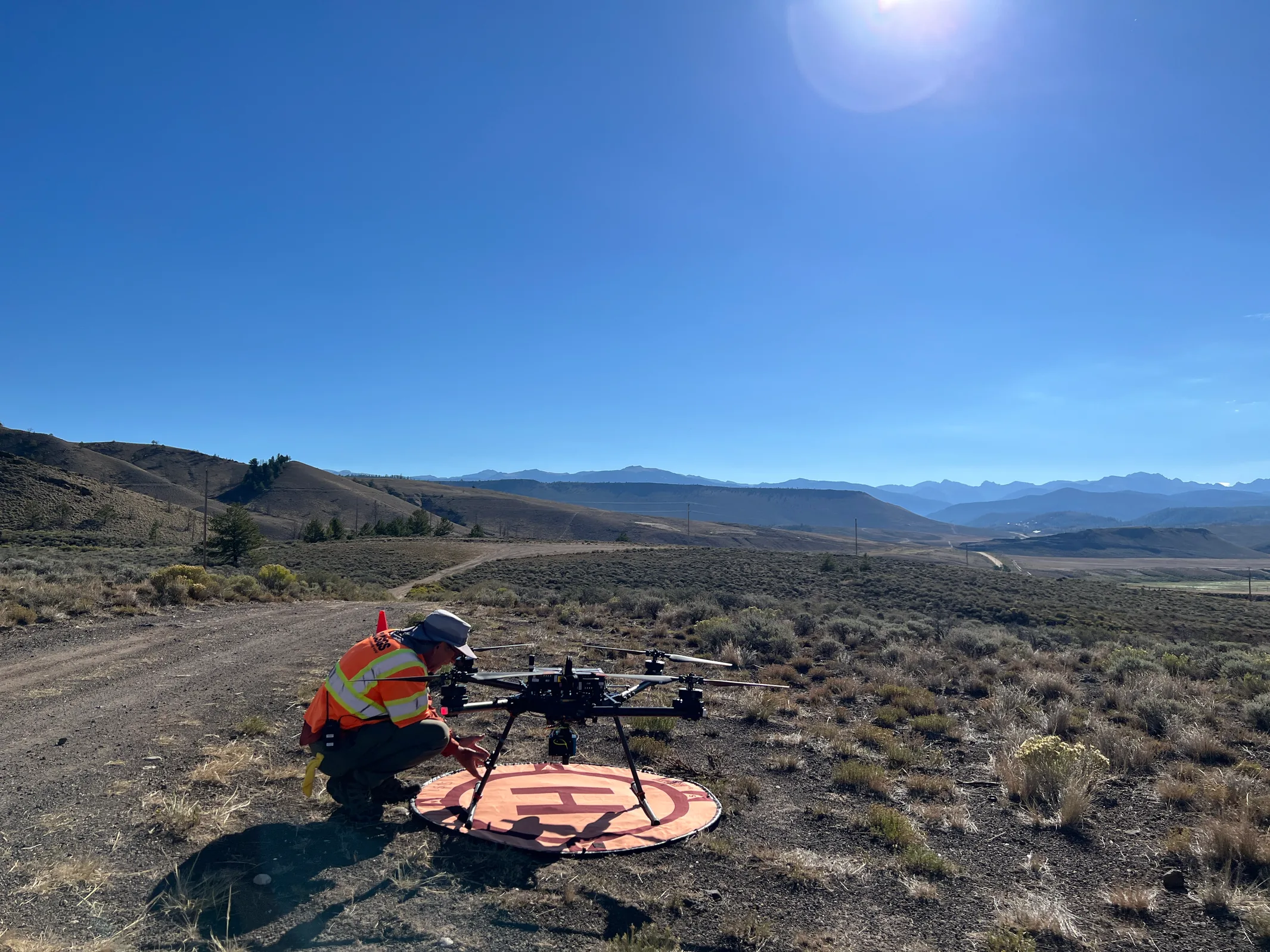
Write a commercial drone operations manual by defining the work your team may accept, assigning flight authority, and turning each recurring task into a procedure with a responsible person, a stop condition, and a record. Keep company policy in the main manual, aircraft instructions in controlled appendices, and short checklists available to the crew in the field.
For U.S. operators working under Part 107, the manual should explain how the team meets the applicable rules. It does not itself grant flight permission. Start with the operations you can conduct today, then add more complex work only after its equipment, training, procedures, and permissions are ready.
On This Page
- Define the operating scope
- Collect the prerequisites before writing
- Build a manual around decisions and records
- Write procedures a crew can carry out
- Specify emergency actions and reporting
- Separate required records from company records
- Rehearse, issue, and maintain the manual
Define the operating scope
This process covers U.S. civil small-drone operations under 14 CFR Part 107, generally involving aircraft weighing less than 55 pounds at takeoff, including attachments and payload. Other operating authorities and jurisdictions need their own treatment. The applicable scope and exclusions are in Part 107, sections 107.1 and 107.3.
Part 107 does not impose a blanket requirement to submit a company operations manual for FAA approval for ordinary operations. Buying a template does not make your manual FAA-approved. A waiver or another operating authority can impose additional procedures and documentation. Check the actual authorization covering your operation before deciding what the manual must contain.
Write the scope as a short statement that identifies the services, aircraft configurations, geographic limits, and permitted operating conditions. For example, a small company might initially limit itself to daytime, visual-line-of-sight property photography with one aircraft and no planned flight over uninvolved people. This is an illustrative company restriction, not a universal legal limit.
Include an explicit route for proposed work outside that scope: the program manager reviews the request, determines the additional requirements, and updates the approved procedures before the job is accepted. A customer's request should never silently expand the flight program.
Keep three kinds of instruction distinct
Regulations and issued permissions establish applicable obligations. Aircraft documentation explains the equipment's operation and limitations. Company procedures define how your team plans, checks, records, and supervises its work.
Label stricter company limits as company policy. If the business chooses a lower working altitude or more conservative wind limit, record the basis and who may revise it. Do not describe that choice as an FAA-wide requirement.
The FAA's AC 107-2A, dated February 1, 2021, provides useful risk-assessment, maintenance, and preflight guidance. It is an advisory circular, and its opening section explains that it does not create or change regulatory requirements. Use its examples alongside current regulations and FAA instructions.
Collect the prerequisites before writing
Assemble the documents that will supply the manual's actual limits and procedures:
- Personnel: remote pilot certificates, aeronautical-knowledge recency records, company aircraft training, and assigned crew roles. The FAA's remote-pilot guidance explains the recurrent training required every 24 calendar months. Company proficiency checks should assess the tasks the person will perform; completing recurrent knowledge training alone does not demonstrate those practical skills.
- Aircraft: make, model, serial number, registration, current operating instructions, payload configuration, battery instructions, and applicable maintenance information. The FAA registration guide explains that Part 107 operators register each aircraft individually.
- Remote ID: the compliance method used by each aircraft, relevant serial-number records, and the manufacturer's instructions for checking status. The FAA Remote ID page describes Standard Remote ID, broadcast modules, and operation without Remote ID equipment within a recognized identification area. These options have different operating conditions; do not treat a module as permission for unrestricted operations.
- Permissions: airspace authorizations, waivers where needed, launch-site access, and any client or location conditions relevant to the job.
- Operational resources: flight-planning information, crew communications, emergency contacts, field forms, and the location of the current manual and checklists.
For each issued FAA permission, record its holder, covered aircraft or operation, area, dates, limits, and special provisions. The FAA airspace-authorization page describes LAANC and DroneZone routes. Airspace authorization and a waiver of an operating rule answer different questions.
For a new operational-waiver application, follow the current FAA Part 107 Waivers page. At the time checked, it directs new applications to Aviation Safety Hub while previously submitted waivers continue in DroneZone. Keep the FAA guidance link in the manual's reference register so a portal change does not strand staff with obsolete instructions.
Do not fill missing aircraft limits with figures copied from a different model. If a required limit or procedure is unknown, keep the affected activity outside the program's scope until it is resolved.
Build a manual around decisions and records
Use the following structure as a writing outline. Each chapter should tell someone what to decide or do and where to record the result.
Suggested operations-manual structure
| Chapter | Decision or procedure to write | Associated record |
|---|---|---|
| Document control and scope | Which version applies, what work is permitted, and who approves changes | Revision register and distribution list |
| Roles and training | Who commands the flight, who performs each task, and how competence is checked | Crew roster and training record |
| Mission acceptance | Whether the requested job fits the aircraft, crew, permissions, and company limits | Job review and permission references |
| Site and risk assessment | Where flight can occur and which hazards require controls or cancellation | Site assessment and go/no-go decision |
| Normal flight procedures | Preparation, inspection, briefing, launch, monitoring, landing, and shutdown | Completed field checklist and flight entry |
| Abnormal and emergency procedures | What triggers intervention, who acts, and when outside help is needed | Event report and follow-up actions |
| Maintenance and configuration | How defects are reported, equipment is withheld, and serviceability is restored | Defect, maintenance, and configuration history |
| Records and document review | Where records live, who can change them, and how lessons update procedures | Record index and change log |
This outline is an editorial adaptation of the duties in Part 107 and the risk, inspection, and maintenance guidance in AC 107-2A. It is not an FAA-prescribed table of contents.
Keep aircraft button sequences and model-specific settings in separate appendices identified by aircraft, configuration, and revision. A battery or flight-control change can then update the affected instructions without obscuring the company's policy history.
For the site-assessment chapter, use a repeatable method such as the publication's drone site-survey process. The manual should say when the survey is required, who completes it, and what changes require reassessment.
Write procedures a crew can carry out
A useful procedure names its trigger, responsible role, required inputs, actions, stop conditions, and record. Replace statements such as “maintain safe operations” with instructions that the crew can apply at a particular point in the job.
Example: release a mission for takeoff
The following is an illustrative company procedure. Adapt it to the actual aircraft and operation before using it.
- Assign command and check readiness. Identify the remote pilot in command (RPIC), meaning the person with final flight authority. Name the person operating the controls and any visual observer. Check that illness, fatigue, or another physical or mental condition does not interfere with safe participation, as addressed by section 107.17. The company may require this assignment before field work begins; section 107.19 makes the RPIC responsible for the operation.
- Confirm scope and permissions. Match the planned location, time, height, aircraft, and activity against the company's permitted work and any issued authorization or waiver. An unresolved mismatch stops the release.
- Review the site. Check weather, airspace, flight restrictions, people, vehicles, obstacles, and recovery areas. Explain how the flight will remain within its planned boundaries. Record new hazards found after arrival.
- Inspect the complete system. Use the aircraft-specific instructions to check the airframe, propulsion, batteries, payload attachment, control links, required Remote ID status, and relevant configuration. Resolve defects before flight. Section 107.15 requires a safe condition check before each flight.
- Brief the crew. State roles, operating limits, communications, hazards, emergency actions, landing areas, and who will call a stop. Have participants confirm that they understand their tasks.
- Make and record the decision. The RPIC releases the flight only when the required checks are complete and conditions support the operation. A weather change, aircraft substitution, new restriction, or loss of site control sends the affected checks back for review.
The regulatory basis for the environmental assessment, crew briefing, functioning control links, adequate power, and secure payload is section 107.49. The sequence and written release record above are recommended company practice.
Use the commercial drone preflight checklist to develop the shorter field aid. A checklist prompts completion; the manual explains the method and what happens when an item fails. In the normal-flight chapter, assign monitoring of aircraft status, energy, weather, people, and traffic, and specify the landing, shutdown, and postflight sequence. Section 107.15 prohibits continuing flight when the system is no longer in a condition for safe operation.
Give every operating limit a source and an action
For each limit, record the value and units, the applicable aircraft or mission, how the crew checks it, and what happens at or before the boundary. Include weather, visibility, altitude, battery planning, aircraft configuration, and any authorization limits.
Part 107's ordinary altitude ceiling is 400 feet above ground level, subject to its structure exception. Section 107.51 also requires at least three statute miles of flight visibility and cloud separation of 500 feet below and 2,000 feet horizontally. State these accurately, then define any more conservative company limits separately. The manual should also identify the applicable visual-line-of-sight, night, and operations-over-people requirements rather than assuming every job fits the same conditions.
Do not invent a fleet-wide battery landing percentage or wind limit. Use the relevant aircraft guidance, operating conditions, and documented company assessment. Define when to turn back or land with a margin, not merely the point at which a warning appears.
For example, if public access cannot be controlled as planned, the procedure should require the crew to reassess the route or stop. A risk score cannot authorize flight that does not meet an applicable rule or permission.
Specify emergency actions and reporting
Write separate entries for lost control link, unexpected aircraft behavior, insufficient energy, loss of required visual observation, traffic conflict, fire, injury, and an unsafe landing area. Each entry needs an observable trigger, immediate priority, aircraft-specific action reference, crew responsibilities, and conditions for ending the operation.
Avoid a universal instruction to “press return to home.” The appropriate response depends on the aircraft's programmed behavior, obstacles, height limits, remaining power, and available recovery areas. AC 107-2A's risk and emergency guidance supports planning contingencies before launch; the exact control sequence must come from the aircraft's documentation.
Put a short emergency contact card with the field checklist. Include the site's address or coordinates, access directions for responders, the company contact, and any coordination numbers specified in an authorization. Assign a person to make calls when crew size permits, while the RPIC manages the aircraft. Do not assume cellular service will be available.
Under section 107.21, an in-flight emergency requiring immediate action permits deviation from Part 107 only to the extent necessary to meet that emergency. The FAA may request a written report. This provision cannot be used to plan a routine deviation in advance.
Define who evaluates reporting obligations
Section 107.9 requires an FAA report within 10 calendar days for serious injury or any loss of consciousness, or qualifying damage to property other than the drone. Its property-damage exception covers repair costs, including materials and labor, not exceeding $500, or fair market value not exceeding $500 in a total loss.
Assign the RPIC responsibility for the required FAA report and identify who helps collect facts and preserve records. Internal notification should happen promptly enough to support response and reporting. Also require a separate check for applicable National Transportation Safety Board (NTSB) notification and reporting obligations; the Part 107 deadline is not a substitute for them. AC 107-2A section 4.4 explains that both agencies' requirements can apply.
Separate required records from company records
Build a record index alongside the manual. For every record, specify its owner, storage location, access permissions, retention basis, and how corrections remain traceable.
| Record | Regulatory or operational basis | What the manual should specify |
|---|---|---|
| Pilot certificate, identification, and recency evidence | Sections 107.7, 107.12, and 107.65; FAA remote-pilot guidance | Physical possession and ready access to certificate and identification when exercising certificate privileges; how recency is checked |
| Aircraft registration and Remote ID details | Registration and applicable Part 89 requirements | Matching aircraft identity and compliance method; possession of the registration certificate in paper or digital form when flying |
| Issued waivers and airspace authorizations | The actual permission and its conditions | Which provisions apply, where crews find them, and what records they require |
| Routine flight, battery, inspection, and maintenance entries | Recommended company practice for ordinary operations; additional requirements may apply | Required company fields and the chosen retention policy |
| Category 4 maintenance records | Specific requirements in section 107.140 | Applicable maintenance, inspection, and retention procedures if Category 4 is in scope |
| Safety event and corrective-action records | Section 107.9 reporting when its criteria are met; internal learning and follow-up | Responsible person, deadlines, protected originals, and how actions are closed |
Source basis: Part 107, FAA registration and Remote ID guidance, and AC 107-2A. Company recordkeeping recommendations do not create a universal federal flight-log requirement.
Ordinary Part 107 operations do not have a blanket flight-hours logbook requirement. That does not eliminate specific required records or conditions attached to a waiver. The publication's required versus recommended flight-records guide explains that distinction in more detail.
A practical company flight entry can contain the date, site, RPIC and crew, aircraft and battery identifiers, flight purpose and duration, permission reference, preflight result, defects, and unusual events. Record a cancellation and its reason too. These are suggested fields, not a prescribed FAA form.
For maintenance, describe how a defect makes equipment unavailable, who may perform the work, what instructions apply, and how the completed action is recorded before reassignment. Follow manufacturer guidance where available; AC 107-2A chapter 7 discusses developing an appropriate maintenance program when instructions are absent. Do not set an arbitrary retention period and call it an FAA rule.
Rehearse, issue, and maintain the manual
Before issuing the first version, walk a representative job through the manual using a tabletop exercise. Then assess the field procedures during a permitted training activity in an appropriate environment. Do not create an actual lost-link or other hazardous condition just to rehearse the response.
Give participants practical prompts: the assigned pilot's recency cannot be verified; the aircraft has an unresolved defect; a person enters the landing area; the authorization does not cover the requested height. Check whether the crew can find the relevant instruction, identify who decides, and record the outcome without inventing a procedure on the spot.
Revise ambiguous instructions before issue. Put the manual identifier, revision, effective date, approving role, and change summary on the controlled copy. Make the current field materials available offline, withdraw obsolete copies, and record which crew members have received the changes.
Set a scheduled review and event-driven review triggers: a new aircraft or payload, changed FAA requirements, a new permission, a significant software change, a safety event, or a procedure that crews cannot follow as written. Updates to emergency or operating instructions may require retraining before affected work resumes.
Start by drafting the scope statement and mission-release procedure for one real service your company offers. Build the supporting aircraft appendix and record forms, then rehearse the entire job. Issue the manual when the team can use it to make consistent decisions and stop work when the conditions require it.
Sources
- 14 CFR Part 107. Federal operating, pilot, preflight, safety-reporting, and Category 4 record requirements.
- FAA AC 107-2A: Small Unmanned Aircraft System. February 1, 2021 advisory guidance; sections 4.4 and 5.11, chapter 7, and appendices A, C, and E support reporting, risk, inspection, and maintenance discussion.
- FAA: Become a Certificated Remote Pilot. Certificate and recurrent aeronautical-knowledge training guidance.
- FAA: How to Register Your Drone. Aircraft registration and documentation guidance for Part 107 operators.
- FAA: Remote Identification of Drones. Compliance methods and aircraft identification records.
- FAA: Part 107 Airspace Authorizations. LAANC and DroneZone authorization pathways.
- FAA: Part 107 Waivers. Current operational-waiver application instructions and supporting operational explanations.
Last checked: September 8, 2026. Recheck current FAA rules and guidance, aircraft instructions, and the conditions of each issued permission when updating the manual.